
 +86-15916242887


News

RF Balun Transformers for Walkie-Talkie Front Ends
2026-07-03
Short Description: A walkie-talkie front end has very little room for error. The antenna path, matching network, transmit chain, receive chain and protection components all hav...
News Content:
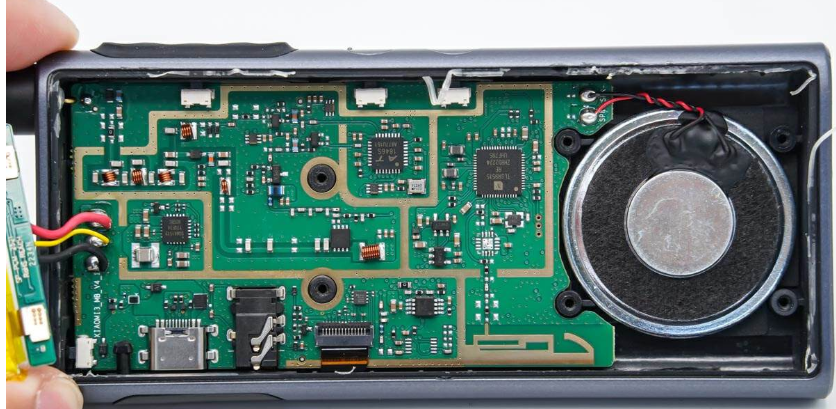
A walkie-talkie front end has very little room for error. The antenna path, matching network, transmit chain, receive chain and protection components all have to work together inside a compact enclosure. That is why Rf Balun Transformers still matter in portable radio design. They bridge balanced and unbalanced paths, support impedance conversion and help the antenna interface behave the way the circuit designer expects.
Reference parts such as TCM2-63WX+, TC1-1-13M+, TCD-9-1W+ and DBTC-10-13LX+ are useful because they reflect the searches engineers actually run when they are comparing broadband transformer options. Around ICs such as RDA1846S, ADF7021, CC1101, Si4463 and SX1262, the balun is rarely a standalone decision. It sits beside the SAW filter, the power amplifier, the low-noise amplifier and the antenna tuning network. A good article should explain that context clearly.
The most important selection points are frequency range, impedance ratio, insertion loss, return loss, amplitude balance and phase balance. For handheld radios, board layout also matters because ground shape, battery placement and the enclosure can move the measured response away from the datasheet result. That is why the phrase "functional alternative for evaluation" is more credible than "drop-in replacement" unless the final system has been fully validated.
From a publishing point of view, this topic works well because it matches both engineering intent and search intent. Buyers search by reference model, then by application, then by local supply option. An article that connects all three usually reads like a real design note rather than generic marketing copy.
In production, the final check should always be made on the assembled board, with the antenna, connector and housing in place. The balun does not solve a poor RF design on its own, but it can make a good design easier to tune and repeat.